

Irene Lüdemann
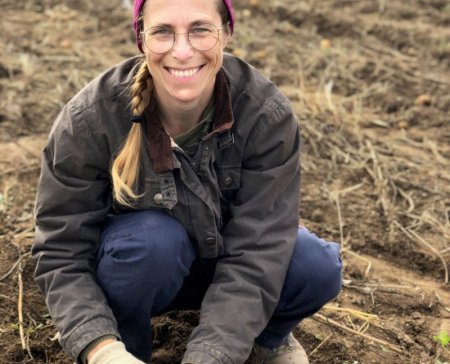
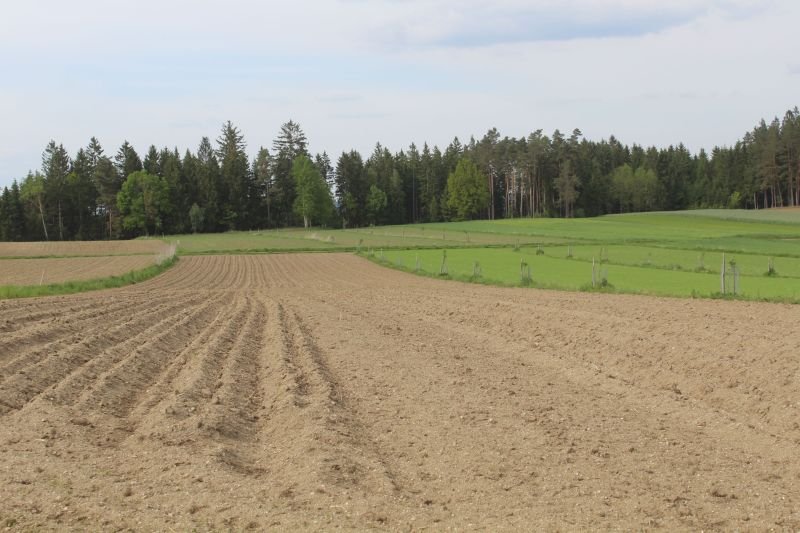
Traditional grain varieties adapted to the region—such as Ostro spelt, Bergland rye, and naked oats—grow in the fields, complemented by crops like flax and potatoes. Through this diversity, Irene Lüdemann fosters robust plant populations while simultaneously creating habitats for numerous insects and wild animals. The farm employs no-till practices; soil cultivation, if performed at all, involves only a ground tiller and a light ripper. Since 2018, Irene Lüdemann has increasingly utilized undersown and cover crops to ensure year-round soil cover. This practice builds humus and strengthens soil life.
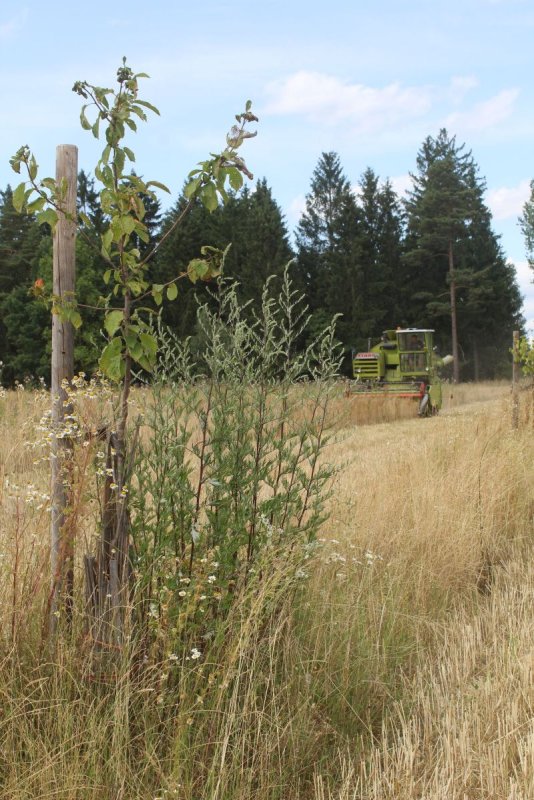
Diversity extends beyond the cultivated fields as well: Irene Lüdemann has established agroforestry strips on seven of the eight plots, featuring horse chestnut, wild cherry, rowan, and birch, alongside fruit-bearing trees and shrubs. These agroforestry systems are complemented by a total of 800 linear meters of multi-purpose hedgerows, comprising 25 different tree and shrub species. Common toads, lizards, and grey partridges all readily make use of these refuges.
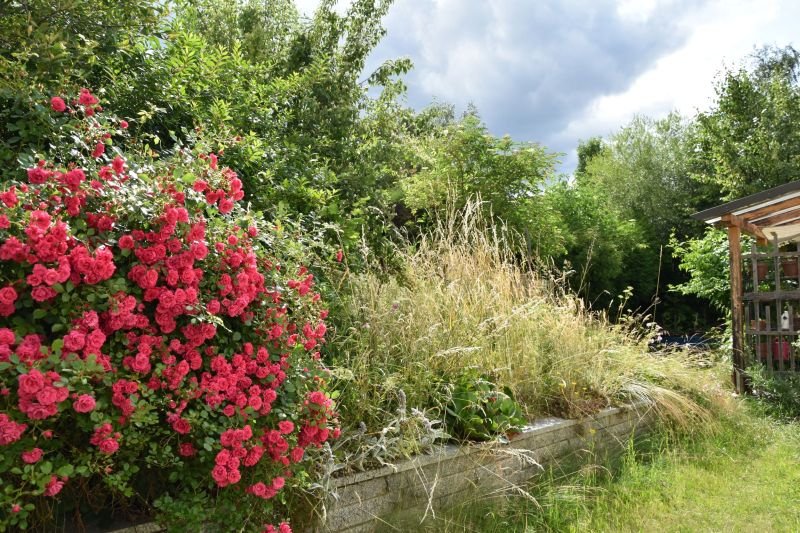
Field margins are left unmown, dry-stone walls have been constructed, and the forest is being transformed into a continuous-cover forest; the farm’s motto—“giving nature more space”—is actively put into practice by Irene Lüdemann and her husband. And the benefits go beyond nature conservation: vibrant, well-rooted soil counteracts erosion during heavy rainfall; regional grain varieties are less susceptible to disease; and agroforestry strips serve as windbreaks and sources of shade for the crops.